Radial Vs. Bias Ply
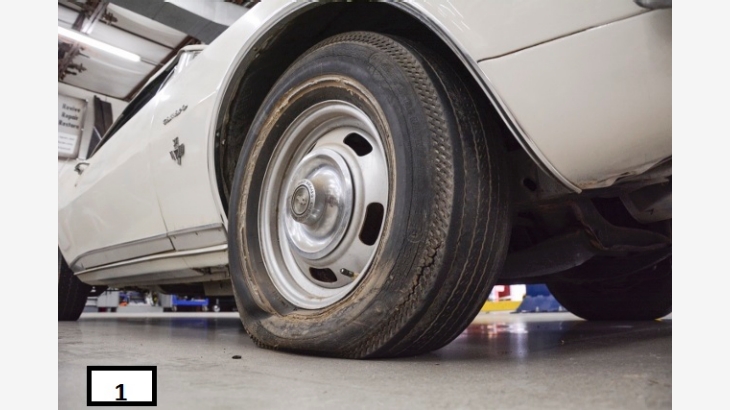
Tires play a huge part in the fun factor of your car. Learn what’s best for your ride and choose carefully to get the most for your money.
Car guys are faced with a lot of decisions when building or modifying an old car. Selecting a set of tires is one of those decisions, a very important one. Whether you’re building a restored classic, a wild hot rod or a modified muscle car, the tires can make or break your driving experience, as well as the overall appearance of the vehicle.
Modern blackwall radials that fit 14- and 15-inch wheels are still readily available at most local tire stores, but a set of generic modern radials just doesn’t fit the theme of a good old fashioned American muscle car. Although generic modern radial tires are safe and provide adequate ride quality, they certainly don’t add to a car’s personality like a set of specialty tires. A car that rolled off the showroom floor with a set of redline tires had instant personality. It’s what a lot of car guys want to recreate when they restore an old car.
The specialty tire market has typically been divided into two segments, bias ply and radial. These terms refer to the internal construction of the tire. Knowing the difference between bias ply and radial tires and how it affects your car’s handling and ride quality is an important part of your tire choice.
Both types of tire construction have pros and cons in the collector car world, so it’s important to be educated on the matter before pulling the trigger on a new set of skins. To get the full scoop on classic car tires, we called in the experts from Coker Tire to help us with facts and figures that are common when shopping for specialty tires.
Bias Ply – Authentic Appearance with a Small Sacrifice in Ride Quality
Inside a bias ply tire (Picture 2), the cords (plies) run at a 45-degree angle from bead to bead. This diagonal pattern is criss-crossed with each layer of ply cord and creates a very rigid structure. In the vintage car market, bias ply tires feature a narrow tread profile with a sharp shoulder that usually has a piecrust pattern. The narrow tread pattern, and the fact that most bias ply tires mount to narrow wheels, makes for a sidewall bulge that is easily identifiable and adds to the look of most classic cars and muscle cars (Picture 3).
Bias ply tires are strong, but the rigidity offers some peculiar handling characteristics if you’re accustomed to driving a modern vehicle on radial tires. The rigid construction means bias ply tires do not conform to the road surface as efficiently as a radial tire. This sometimes creates a “wandering” sensation, as the tires tend to follow the ruts and breaks in the pavement.
Bias ply tires were used on American automobiles until the ‘70s, so if you’re restoring a car from that time frame, a bias ply tire is an appropriate choice. Many original fitments and brands are available for muscle cars, providing the ultimate authentic appearance. In the case of Coker Tire, its bias ply tire offerings are manufactured from the original molds that were used in the ‘50s and ‘60s. The molds have been restored and brought up to modern standards, but still have all the same features as the original tires that rolled beneath millions of classic cars.
Radial – Superb Ride Quality with a Small Sacrifice in Appearance
Radial tires are an easy and effective upgrade for muscle cars, as the more modern construction offers great improvements, including ride quality, wet weather traction and tread life. The advantages are created by the tire’s construction, which consists of ply cords that run 90 degrees in relation to the bead. This radial orientation of the cords allows for a more flexible design, which conforms to the road surface, and allows the tires to skim across the ruts and breaks in the surface. This makes for a pleasant ride quality, even on rough roads.
In most cases, a radial tire will have a wider footprint, even if it is the equivalent size to a bias ply tire. This increased contact patch offers more traction and more stability, while the rounded shoulder provides additional traction in hard cornering situations.
While it’s true that radial tires are not period correct for most hot rods and muscle cars, it’s hard to argue with the performance and ride quality advantages. Add to that, the fact that vendors offer true whitewall, redline, gold line and other specialty radial tires.
The BFGoodrich Radial T/A (Picture 4) is often seen at car shows with more than 20 sizes available and the period correct look.
When we contacted Coker Tire to gather information on this article, we gleaned that Coker Tire’s advantage is in its manufacturing process. Coker’s specialty radial tires are built from scratch to include the custom sidewall treatment in the original tire manufacturing process, unlike some of its competitors, who adhere a custom sidewall to an existing tire made by another manufacturer.
Bridging the Gap – Authentic Bias Ply Looks with Radial Internals
Until now, car guys have been faced with choosing between bias ply and radial. Coker Tire has successfully blended the qualities of each type of construction into what it considers a “bias look radial” tire (Picture 5). The American Classic bias look radial is the first of its kind and it won the 2013 SEMA Best New Product award in the Tires and Accessories category.
The new American Classic radial features the narrow tread profile, bulged sidewall and aspect ratio of a vintage style bias ply tire, with the internal construction of a radial. It’s truly the best of both worlds. The American Classic bias look radial is available in nine sizes, and fits 13-, 14- and 15-inch wheels, so there are lots of options for O.E. and custom big-n-little fitments. It’s available in wide whitewall and blackwall.
During our research, we found that the American Classic bias look radials are made in the USA, and they’re DOT and ECE (European market) approved. The price is a few bucks more than a comparable whitewall radial, but we’d venture to say that bridging the gap between bias ply and radial is well worth the extra expense. We believe that the bias look radial breakthrough has opened the door for even more specialty tire innovation, so we’re hoping to see more new designs in the coming years.
Tire Size Matters
If you’re restoring a muscle car to its “showroom” condition, you should refer to the original build information to determine the correct tire size. If you don’t have an original tire to use as reference, there is plenty of reference material online to help you figure it out and the folks at Coker Tire would also be glad to help. From the ‘50s through the ‘70s, tire sizes changed often and it even varied among models. For instance, a 1966 Chevelle would’ve come with 6.95-14 tires if it was a six-cylinder car, 7.35-14 tires if it had air conditioning or one of the higher horsepower engine options, or 7.75-14 tires if it was a station wagon, or if it was equipped with a big block engine. This type of OE fitment variations can cause some confusion. It only gets tougher when you have to choose between blackwall, whitewall or redline, which were factory options for this particular example.
Radial tire sizing is spelled out a bit differently than bias ply sizing, so cross referencing the sizes can be a little tricky. Coker Tire provided a handy cross reference chart (Picture 6).